Two rain ponchos can be made of the same plastic and perform completely differently, because the number that decides how a poncho feels, folds, and holds up is not the material name printed on the bag. It is the thickness of the film. Buyers get quoted that thickness in whatever unit a given supplier prefers, which is why a spec that reads 0.03 millimeters, 30 microns, 1.2 mil, and 120 gauge can describe the exact same sheet. This is a walk through what those numbers mean, where each type of poncho actually lands, and how to read a thickness spec so you order the right one.
One measurement, four units
Film thickness is a single physical dimension expressed four common ways, and knowing the conversions keeps you from comparing two quotes that look different but are not. One mil equals 0.0254 millimeters, which is 25.4 microns. In the plastics trade, gauge is defined so that 100 gauge equals 1 mil. So a 0.03 mm poncho is 30 microns, roughly 1.2 mil, or about 120 gauge, all describing the same wall of plastic between the wearer and the weather.
The reason this matters for an order is that thickness, not material, is the first-order driver of durability, weight, and cost per unit. Material chemistry changes how the film feels and how it handles cold, but a thicker sheet of the same polymer is stronger and heavier than a thin one. Ask for the thickness figure in writing on any quote, and convert everything to one unit before you compare.
Where disposable PE ponchos land
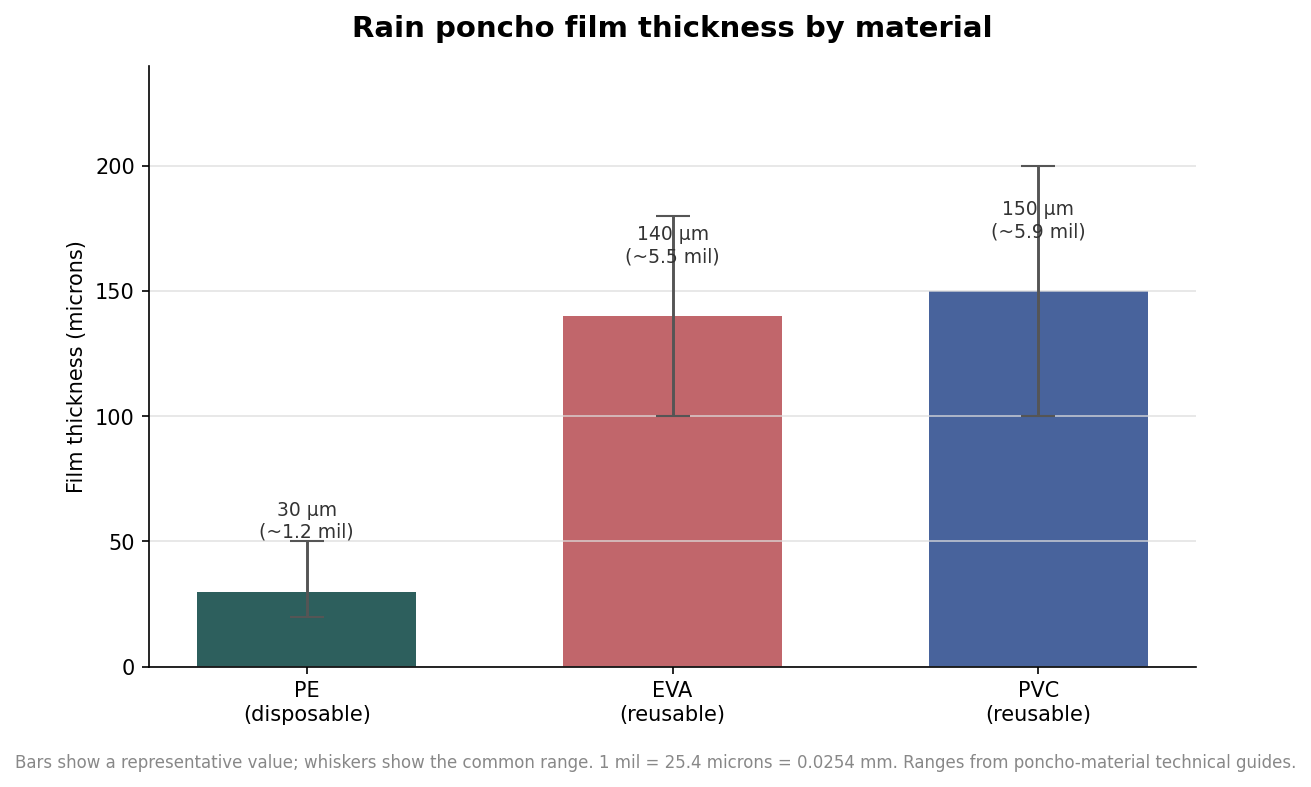
The lightweight ponchos handed out at stadiums, theme parks, and outdoor events are almost always polyethylene, or PE, in the range of 0.02 to 0.05 mm, which is roughly 20 to 50 microns or about 0.8 to 2 mil. Around 0.03 mm is the common standard for a single-use event poncho: thin enough to fold into a pocket-sized packet and cheap enough to give away by the thousand, thick enough to shed a normal rain shower for the length of a game or a parade. At the very bottom of that band, the emergency ponchos sold for a dollar can be down near 0.02 mm, which is genuinely one-and-done and tears easily once wet and stretched.
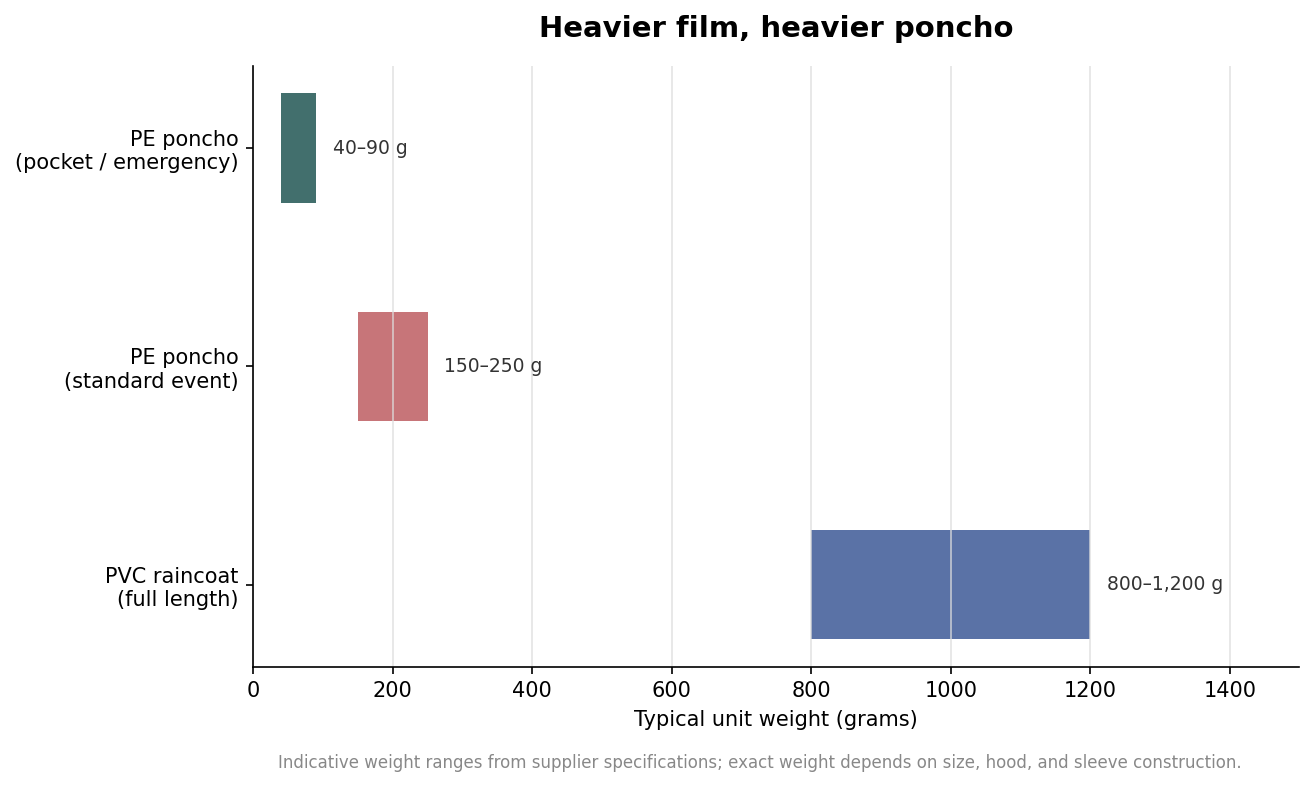
A standard adult PE poncho is cut around 50 by 80 inches unfolded as a one-size-fits-most piece, and a pocket version weighs well under 100 grams. Heavier PE event ponchos with a proper hood and sleeves push toward 150 to 250 grams. None of this thickness is about being waterproof in the pass-or-fail sense; even the thinnest film blocks water. It is about how many times the poncho survives being put on, sat in, and stuffed back into a bag.
What the extra thickness buys
Step up to a reusable poncho and the film roughly triples or more. EVA runs about 0.10 to 0.18 mm and flexible PVC about 0.10 to 0.20 mm, in the neighborhood of 4 to 8 mil. That thickness is what makes a poncho feel like a garment rather than a bag: it drapes, it resists tearing at the neck and seams, and it survives repeated folding. Technical comparisons put the tensile strength of heavier PVC film at roughly three to four times that of thin PE, which is why a PVC rain layer can be rated for years of regular use rather than a single afternoon. EVA occupies a middle ground, softer and more pliable than PVC and often chosen when a reusable poncho still needs to pack down reasonably small.
The cost of that durability is weight and bulk. A full-length PVC rain layer can run from about 800 to 1,200 grams, an order of magnitude heavier than a pocket PE poncho, so it stops being something you hand out at a gate and becomes something a person buys and keeps. Thicker film also raises the per-unit price and the shipping weight of a bulk order, both of which matter when the quantity runs into the thousands.
Matching thickness to the job
Work backward from how the poncho gets used. For a one-time giveaway where the goal is that every attendee stays dry enough to enjoy the event and nobody expects to keep the poncho, a PE film around 0.03 mm is the honest match: any thicker and you are paying for durability that gets thrown away. For a gift or resale item that carries a logo people are meant to reuse, the 0.10 mm-and-up EVA or PVC range is where the product feels worth keeping and the branding gets seen more than once. Multi-day events sit in between, and a mid-weight PE or a light EVA often makes more sense than the cheapest film, because a poncho that splits on day one is a poncho that gets littered and reflects on whoever handed it out.
Thickness also interacts with printing. Thin PE takes a printed logo well but has less surface stability, so large solid ink coverage can look better on a slightly heavier film. If a bold, full-coverage design is central to the order, it is worth confirming with the printer that the chosen thickness supports it cleanly rather than assuming the thinnest option will. Whatever you choose, treat the thickness figure as the spec that anchors the decision: settle the number first, convert every quote to the same unit, and let material and features follow from there.
Leave a Reply