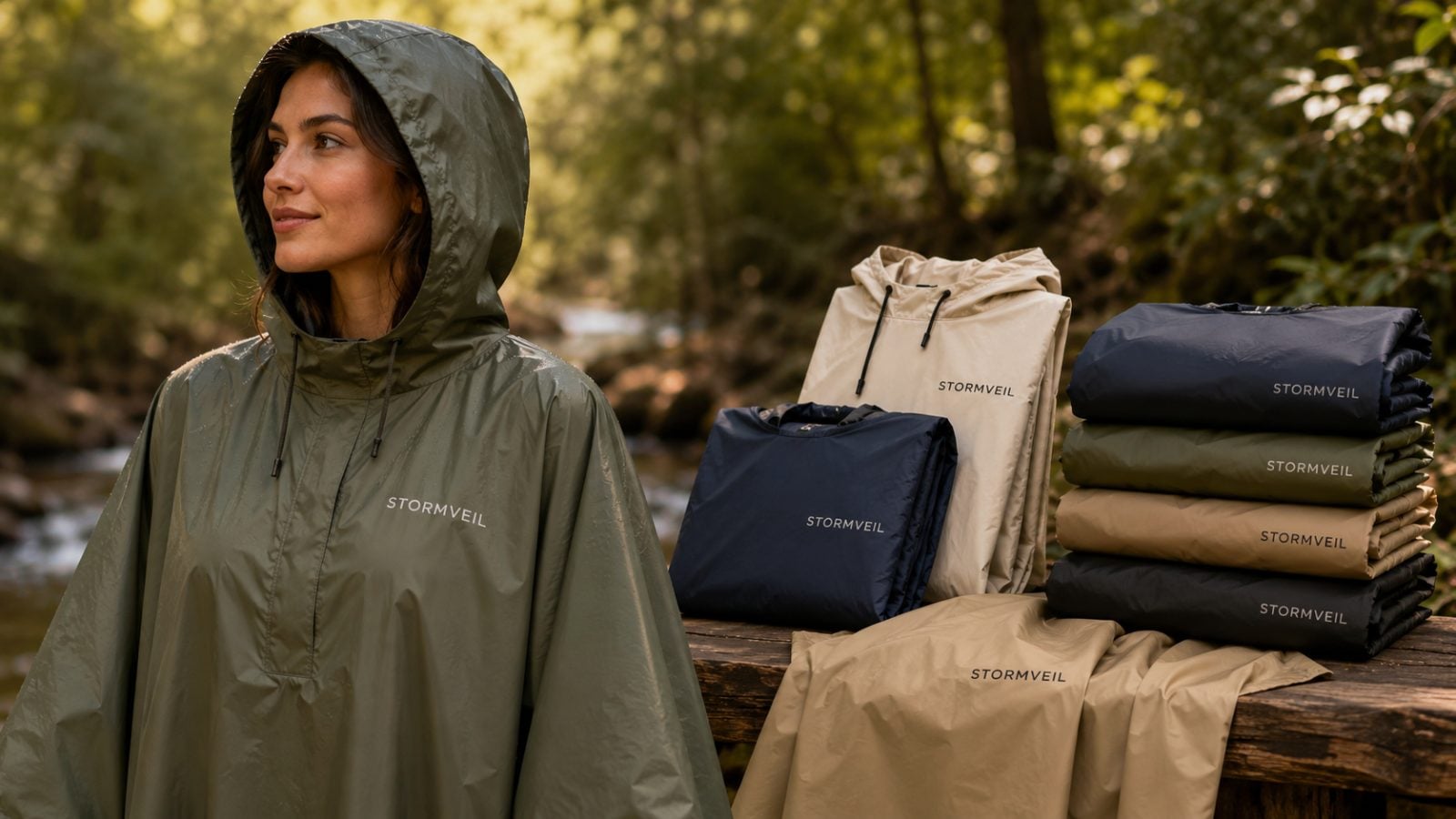
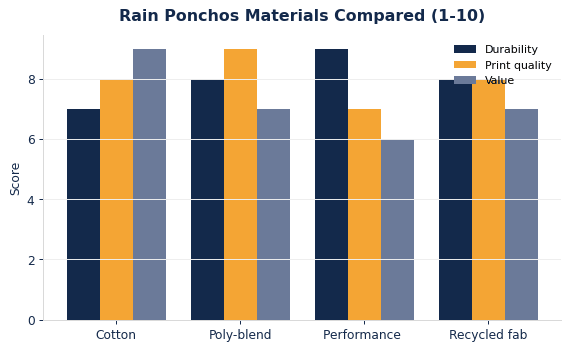
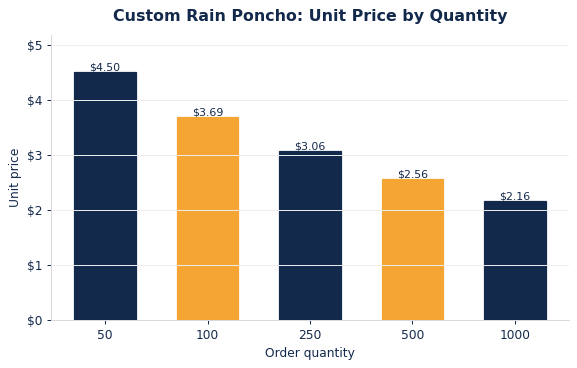
Custom rain ponchos keep road races, fun runs and charity walks running on wet days: dry participants in the start corral, comfortable volunteers and branded finishers, all carrying your event and sponsor logos. Customized Rain Ponchos prints them from a minimum of 12, with a free mockup within 24 hours and standard turnaround of about 2 weeks.
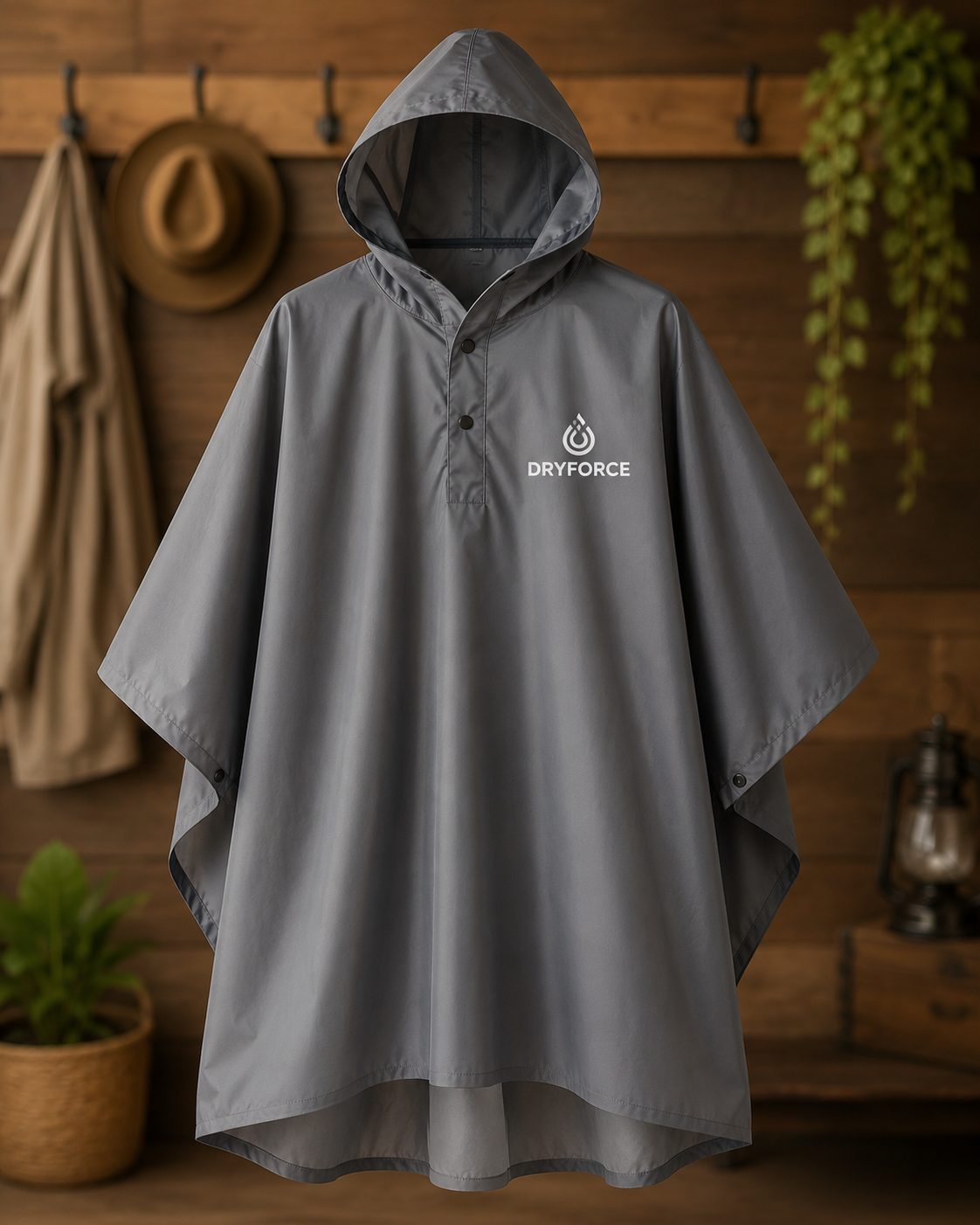
- Start-corral ponchos keep runners dry before the gun and are shed at the start.
- Finish-line and volunteer ponchos work best in sturdier, reusable styles.
- Event, charity and sponsor logos can share one poncho design.
- Minimum order 12, free mockup within 24 hours, about 2 weeks standard turnaround.
- Pay nothing until you approve the design.
Why do race organizers order custom rain ponchos?
Race organizers order custom rain ponchos because weather is the one variable a start line cannot control, and a printed poncho turns a wet morning into a branded one. Runners waiting in a start corral get cold long before the gun, walkers on a charity route are out for longer than elite runners, and volunteers stand in the same spot for hours. A poncho solves all three problems while putting the event name in every photo.
Unlike a race shirt, which participants pick up days earlier, rain ponchos are used on the day itself, in the exact moments that end up on social media: the start, the finish and the after-party. That makes them one of the few race-day items that carry sponsor logos into crowd photos even when the weather is poor.
- Participants: stay dry and warm while waiting to start.
- Volunteers and marshals: stay visible and comfortable at aid stations and corners.
- Spectators and families: a branded handout at the finish area or merchandise tent.
- Sponsors: logo exposure in photos that would otherwise show only umbrellas.
Which rain poncho style works best for each part of race day?
The best rain poncho for race day depends on how long each person will wear it. Runners in the start corral need something light that can be pulled off and left behind at the start. Volunteers and course marshals need a sturdier poncho they will keep on for an entire shift. Customized Rain Ponchos offers styles for both jobs, so many races order two or three styles in one run.
| Race-day role | Recommended style | Why it fits |
|---|---|---|
| Start corral runners | Clear emergency poncho | Light, packable and easy to shed once the race begins. |
| Charity walkers | Standard drawstring poncho | A drawstring hood stays in place on a longer, slower route. |
| Volunteers and marshals | Heavy-duty PE poncho | Thicker film holds up through a full shift in wind and rain. |
| Race staff and timing crew | Reusable EVA rain poncho | Reusable at the next event on the calendar. |
| Kids dash participants | Kids rain poncho | Sized for children so the hem does not trip small runners. |
If you are unsure which mix to choose, describe your event on the quote form and the team will suggest a split on the free mockup.
How should a race handle ponchos that runners throw away at the start?
Races that expect runners to shed rain ponchos at the start should plan for collection, not just distribution. A light clear emergency poncho is the right style for this moment because runners can pull it over their head in seconds and drop it once the corral starts moving. The printed logo still appears in every start-line photo taken before the gun.
Many organizers place volunteers with collection bags just past the start line, the same way they collect discarded warm-up layers. Clearly marked drop zones keep the road safe and stop ponchos from tangling around runners’ feet. Some events also announce at the corral that ponchos should be dropped to the side rather than in the running lane.
- Hand out ponchos at the corral entrance, not at packet pickup, so they stay dry and folded until needed.
- Brief corral marshals on where discarded ponchos should go.
- Station collection volunteers just after the start mat.
- Sweep the start area once the final wave has left.
For walkers and slower participants who will wear the poncho the whole way, a standard drawstring poncho is the better choice because the hood stays put over a longer distance.
Can sponsor logos and a charity name share one race poncho?
Yes, a single race poncho can carry the event logo, the charity or beneficiary name and sponsor marks, as long as the layout gives each element a clear zone. The back panel is the largest print area and usually holds the event name or main graphic, while the front chest suits a presenting sponsor or the charity mark. Customized Rain Ponchos shows the full layout on your free mockup within 24 hours, so sponsors can sign off before anything is printed.
Crowded sponsor walls rarely read well on poncho film, which moves and folds with the wearer. A stronger approach is to give the title sponsor real space and group supporting sponsors in a single band.
- Back panel: race name, year-free event graphic or charity slogan.
- Front chest: presenting sponsor or charity logo.
- Sponsor band: supporting sponsors in one color for a cleaner look.
Leaving the year off the design lets leftover ponchos be used at the next edition of the race. Unlimited free revisions mean you can adjust the layout as late sponsors sign on, and you pay nothing until the design is approved.
How many rain ponchos should a race or charity walk order?
The number of rain ponchos a race should order depends on who will receive one: every registered participant, only walkers, only volunteers, or anyone who asks at the merchandise tent. Start with your registration list and volunteer roster, then decide which groups get a poncho by default and which receive one only if rain is forecast.
Because weather is unpredictable, many races treat ponchos as a standing supply rather than a one-off. Ordering a year-free design in a sturdier style lets you store the remainder and use it at the next event, which removes some of the guesswork. Customized Rain Ponchos accepts orders from a minimum of 12, so small charity walks and corporate fun runs can order as easily as large road races.
- Participants: match the registration count if ponchos are part of the race kit.
- Volunteers: match the roster plus a few spares for walk-up helpers.
- Merchandise tent: a separate batch to sell or give away on wet days.
If you mix styles, such as clear ponchos for runners and heavy-duty ponchos for volunteers, list each quantity on the quote form so the mockup and quote reflect the full order.
When should a race director order custom rain ponchos?
A race director should order custom rain ponchos at least a few weeks before race day, because standard turnaround is about 2 weeks after the design is approved. Adding a buffer for sponsor approvals and shipping to the venue or the race office keeps ponchos from becoming a last-minute worry during packet pickup week.
The timeline is simple when the artwork is ready. Customized Rain Ponchos returns a free mockup within 24 hours of receiving your logo and event details. Once you and your sponsors approve it, production begins. Faster turnaround is available with express shipping if the race date is close.
- Request a quote: share the race date, styles and quantities.
- Review the mockup: arrives within 24 hours, with unlimited free revisions.
- Collect sponsor approvals: the step that most often causes delays.
- Approve and pay: nothing is due until you approve the design.
- Production and delivery: about 2 weeks, faster with express shipping.
See how it works for the full ordering process.
What should a race team check before approving the poncho order?
Before approving a race poncho order, the team should check that the printed design reads clearly from a distance, that every sponsor is spelled and placed correctly, and that the quantity split between styles matches the event plan. These checks take minutes on the mockup and prevent the most common reprint requests.
- Readability: the race name should be legible in a photo from across the start area.
- Contrast: on clear ponchos, choose darker, saturated ink so the logo stands out.
- Sponsor accuracy: confirm names, logos and placement with each sponsor in writing.
- Style split: runners, walkers, volunteers and kids each in the right style.
- Delivery address: the race office, the venue or a storage unit, with someone ready to receive the boxes.
Customized Rain Ponchos keeps revising the mockup until every item on that list is right. Start with the custom rain ponchos overview, then send your race details through the quote form.
Frequently asked questions
Are clear rain ponchos a good choice for a marathon start corral?
Clear rain ponchos are a strong choice for a marathon start corral because they are light, quick to put on and easy to shed once the race begins. Runners stay dry while waiting, and the printed logo still appears in start-line photos. Customized Rain Ponchos recommends darker, saturated ink on clear film so the race name stays readable against bright running gear underneath.
Can a charity walk print its beneficiary's logo on rain ponchos?
A charity walk can print its beneficiary's logo on rain ponchos alongside the event name and any sponsors. The charity mark often sits on the front chest while the walk name fills the back panel. Customized Rain Ponchos shows the full layout on a free mockup within 24 hours, so the charity can approve how its brand appears before anything is printed.
Which rain poncho should race volunteers wear during a long shift?
Race volunteers on a long shift are best served by a heavy-duty PE poncho, which uses thicker film that holds up to wind, rain and hours of movement at aid stations. Volunteers stay comfortable and easy to spot. Printing a word such as volunteer or staff on the back panel helps runners and spectators find help quickly on the course.
Can rain ponchos be included in race packets at packet pickup?
Rain ponchos can be included in race packets, and compact styles fold small enough to sit with a bib and shirt. Some organizers prefer handing ponchos out at the corral instead, so they arrive dry and folded on a wet morning. Either approach works with printed ponchos from Customized Rain Ponchos, which ships them ready to distribute.
Should a race print the year on its custom rain ponchos?
Printing the year on custom rain ponchos makes them a dated souvenir, but leftovers cannot be reused at the next edition. Many race directors leave the year off and print only the event name and logo, so unused ponchos become a ready supply for future wet race days. The choice is easy to test on the free mockup before approving.
Can a corporate fun run order a small batch of branded rain ponchos?
A corporate fun run can order branded rain ponchos from a minimum of 12 at Customized Rain Ponchos, which suits team-building runs, office wellness events and small charity challenges. The company logo can sit on the front with the event name on the back. A free mockup arrives within 24 hours, and nothing is paid until the design is approved.
How do race organizers keep discarded rain ponchos off the course?
Race organizers keep discarded rain ponchos off the course by placing collection volunteers with bags just past the start line and announcing drop zones in the corral. Runners then shed ponchos to the side rather than in the running lane. Clear emergency ponchos are light and fold easily, which makes collection and cleanup faster after the final wave starts.
Can kids races and family fun runs use custom rain ponchos?
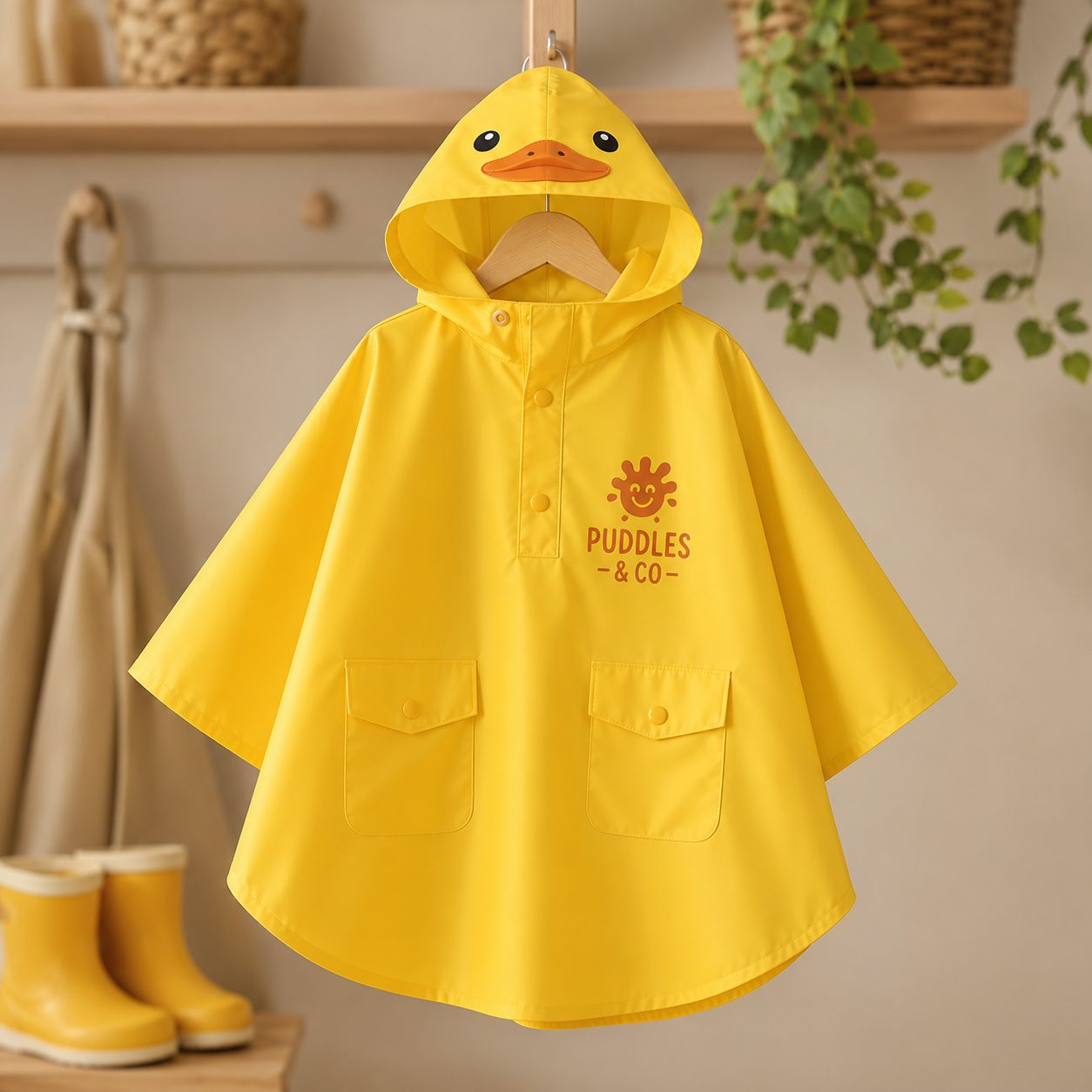
Kids races and family fun runs can use custom rain ponchos, and a dedicated kids rain poncho fits children better than an adult size, so the hem does not get underfoot. The event logo prints on the back like an adult poncho. Customized Rain Ponchos can include kids and adult styles in one order with a single matching design.
Can rain ponchos be sold at a race merchandise tent on wet days?
Rain ponchos sell well at a race merchandise tent on wet days because spectators and late arrivals often come unprepared. A printed design with the race name turns a practical purchase into a souvenir. Customized Rain Ponchos suggests ordering a separate merchandise batch so race kit ponchos and retail stock are easy to track during the event.
What details should a race send to get a rain poncho quote?
A race should send its event date, logo files, sponsor logos, preferred rain poncho styles and the quantity for each group, such as runners, walkers and volunteers. Delivery address and any deadline for sponsor approvals also help. Customized Rain Ponchos uses those details to prepare a free mockup within 24 hours and an accurate quote for the full order.
Can a race reuse leftover rain ponchos at its next event?
A race can reuse leftover rain ponchos at its next event when the design avoids dates and the ponchos are stored dry and folded. Sturdier styles such as the heavy-duty PE or reusable EVA poncho hold up best between seasons. Customized Rain Ponchos can match the same artwork on a later order if the supply runs low.
Get a free mockup for your rain ponchos
Send your logo or idea and the quantity you have in mind. Customized Rain Ponchos returns a free mockup within 24 hours, you approve the design before anything is produced, and standard turnaround is about two weeks with faster options available. Get a custom quote.